10:00 AM Onward: Discovering the Quarter's True Character
"The narrowest alleys don't just hold shadows; they hold the weight of centuries."
Getting lost in the Gothic Quarter is not a mistake; it is the intended experience, provided you know how to find your way back.
* Watch your pockets: The density of the Gothic Quarter makes it a prime zone for pickpockets; keep your belongings in front of you. * Seek the courtyards: The best architectural treasures are often tucked behind heavy wooden doors or at the end of dead-end alleys. * Time your visits: Visit early in the morning to see the Roman foundations before the midday crowds swallow the atmosphere. * Respect the identity: Understand that this is the historic heart of Catalan culture, not just a museum backdrop.

How do I get beyond the typical tourist paths? The sun hits the pavement of Carrer del Bisbe at 10:00 AM, casting long, sharp shadows that seem to point toward secrets hidden in the stone. According to World Bank data, Spain recorded international tourist arrivals of 36,410,000 in 2020.
You stand at a junction where the Roman walls meet medieval masonry, feeling the sudden urge to turn left into a narrow gap that looks barely wide enough for a person.
The Gothic Quarter, or *Barri Gòtic*, is a dense thicket of history located 120 km south of the Pyrenees. Because of its winding, organic layout, it can feel overwhelming to those used to the wide, 20-meter-wide boulevards of the Eixample district.
The trick to navigating this labyrinth is to understand that the streets are layered; you are walking over Roman ruins, medieval fortifications, and Renaissance additions all at once.
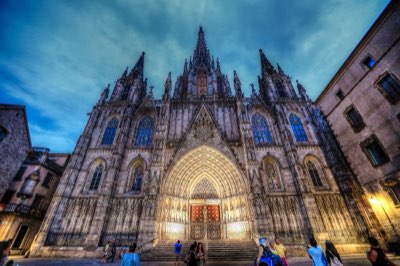
Do not try to map the entire district at once. Instead, use the major landmarks, like the Barcelona Cathedral, as your North Star. If you find yourself wandering too deep into the residential alleys, look for the larger, more open squares to reorient yourself.
Use the Quarter as a starting point for your day, but don't let its complexity exhaust you before you reach the more modern landmarks. But what happens when the beauty leads you straight into a trap?
Where can I find the hidden gems worth seeking? A heavy wooden door creaks shut behind a passerby, leaving a quiet courtyard bathed in golden light, momentarily cutting off the noise of the city. You realize that the most impressive architecture isn't always the cathedral itself, but the small, quiet corners that people walk right past.
While the massive Gothic Cathedral is the undeniable centerpiece, the true "hidden gems" are often found in the smaller, specialized sites. For example, look for the small, quiet plazas like Plaça de Sant Felip Neri.
This square, tucked away from the main thoroughfares, holds a quiet, somber beauty with its scarred walls that tell stories of the city's more turbulent history.
Another way to find treasure is to look up. Many of the buildings in the Gothic Quarter feature intricate stone carvings, gargoyles, or small balconies that are easily missed when looking at a phone screen.
If you find a small, quiet courtyard or a side chapel, take a moment to look at the craftsmanship. These small-scale artistic details often provide a more intimate connection to the city's history than the massive monuments.
However, finding these gems is only half the battle; you also have to survive the local economy.
Dining & Dwelling: Quarter Life Hacks
The smell of fried calamari wafts from a small, narrow doorway, competing with the scent of old stone and damp pavement. You hesitate, wondering if this tiny, crowded table is a local treasure or a tourist trap designed to empty your wallet.
Finding an authentic meal in the Gothic Quarter requires a sharp eye. Avoid any restaurant that has large, laminated menus with photos of food displayed on the sidewalk; these are almost certainly tourist traps.
Instead, look for small *tascas* or bars where the menu is short, written in Catalan or Spanish, and where the locals are standing at the bar.
Regarding where to stay, deciding between staying in the Gothic Quarter versus a nearby neighborhood like El Born or Eixample is a major choice. Staying in the Gothic Quarter puts you in the heart of the history, but it can be noisy and crowded.
If you prefer a quieter, slightly more upscale experience, look toward the Eixample. If you want a trendy, artistic vibe, El Born is often a better fit. If you do stay in the Gothic, look for boutique hotels in converted historic buildings to ensure you get a sense of the local atmosphere.
But as the sun sets and the crowds swell, a different kind of challenge emerges.

Cultural Echoes: Understanding the Heart of Barcelona
You run your hand along a rough, cool stone wall, feeling the texture of a city that has been rebuilt and reimagined for two thousand years. It is not just a collection of old buildings; it is a living testament to the Catalan people.
The Gothic Quarter is the foundational layer of Barcelona's identity. It represents the transition from Roman prominence to medieval Catalan power.
This area was once the center of trade, and that weight is still felt in the narrowness of the streets and the thickness of the walls.
Understanding this history helps you appreciate why the city's identity is so fiercely protected. The Gothic Quarter isn't just a backdrop for photos; it is the place where the modern city's character was forged.
This deep-rooted history is what makes the later, more flamboyant architecture of Gaudi and the Modernisme movement so striking—it was a deliberate, artistic response to the weight of this historic core.
But as the crowds grow, the beauty can sometimes feel like a distraction from the dangers of the street.
Safety & Smarts: Surviving the Crowds
A sudden, sharp tug on your shoulder makes you spin around, only to find a crowded walkway where everyone is moving in different directions. You quickly check your bag, feeling a momentary flash of panic as you realize how easily a hand could have slipped inside.
Safety is the most practical concern when visiting the Gothic Quarter. Because the streets are narrow and often crowded, pickpockets find it incredibly easy to operate.
They rely on the "bump and grab" technique, where they create a momentary distraction—like bumping into you or asking for directions—to lift a wallet or phone.
When I first walked through the narrowest passages of the district, I found myself constantly checking my cross-body bag, realizing how easily the shadows could hide a quick hand.
To stay safe and make the most of your time, follow this checklist:
- Always carry your bag in front of you: Never let a backpack or purse hang loosely behind you in a crowd.
- Keep your phone secure: Do not leave your phone sitting on a table at an outdoor cafe.
- Blend in: Avoid wearing overly flashy jewelry or looking like a lost tourist with a giant paper map.
- Use digital backups: Keep digital copies of your documents, but don't carry all your cash at once.
- Monitor the time: Avoid wandering the darkest, most isolated alleys alone after 11:00 PM.
By staying alert and moving with purpose, you can enjoy the beauty of the district without becoming a target. There are, however, certain limitations to this lifestyle.
Note that the Gothic Quarter is not for everyone. If you have mobility issues, the uneven cobblestones and steep, narrow stairs can be treacherous. Additionally, the high density and noise levels can be overwhelming for those seeking a peaceful retreat.




Comments 0