8 Ways to See Gaudí: Elevate Your Barcelona Visit Now
"To look at Gaudí is to look at the way a tree reaches for the sun or how a bone supports weight; he didn't just build structures, he grew them."
If you walk through Barcelona thinking you are just looking at "pretty buildings," you are missing the heartbeat of the city. To truly see Gaudí, you must understand that he wasn't just an architect; he was a storyteller using stone, tile, and light to express a specific Catalan soul.
Key Takeaways * Gaudí’s work is a profound dialogue between Catalan identity and the revolutionary spirit of Modernism. * Understanding the "why"—the engineering and spiritual purpose—transforms a tourist visit into a profound experience.
* Each masterpiece represents a unique convergence of organic nature, advanced geometry, and deep devotion. * Contextual knowledge regarding commissions and timelines is the key to unlocking the value of each site.

Why is Gaudí’s Work a Manifestation of Catalan Identity?
The sun hits the stone of the Passeig de Gràcia at midday, casting long, sharp shadows that make the undulating facades of the Eixample district look like they are breathing. Standing on the sidewalk, you realize these aren't just walls; they are a defiance of the straight line.
Gaudí’s work emerged during a period of intense cultural rebirth in Catalonia. While much of Europe was leaning into industrial rigidity, Gaudí leaned into the organic. He utilized *Modernisme*, a movement that sought to assert a unique Catalan identity through craftsmanship and local materials.
He didn't want to mimic Parisian or German styles; he wanted to build something that felt as though it had sprouted from the very soil of Catalonia. In 2025, as travelers look for authenticity, his work remains the gold standard of regional pride.
His use of biomimicry—designing structures that mimic biological forms—wasn't just an aesthetic choice. It was a way to honor the natural world as a divine masterpiece. By using local ceramics, wrought iron, and stone, he tied his architectural language to the physical reality of the Mediterranean.
He turned the heavy, static nature of traditional building into something fluid and alive. But his ability to move between the spiritual and the domestic is where the real complexity lies.
Is the Sagrada Família a pilgrimage in stone? The morning mist often clings to the spires of the Sagrada Família, making the massive towers look like they are rising out of a dream rather than a construction site. You stand at the base of the Nativity Façade, feeling small against the weight of a century of labor.
The Sagrada Família is the ultimate case study in architectural evolution. Because it has been under construction for generations, it represents a living timeline of human devotion. It is not a finished monument, but a continuous act of creation.
The transition from the early, more traditional Gothic influences to the later, highly complex geometric forms shows a master refining his language of light and height. In the current 2026 construction phase, the integration of modern stone-cutting technology with 19th-century visions is staggering.
When you visit, you must look at the interplay of the façades. The Nativity Façade celebrates life and birth with organic, overflowing detail, while the Passion Façade uses harsh, angular lines to evoke suffering. This isn't just decoration; it is a theological narrative written in stone.
To navigate this visit effectively, you must acknowledge that you are walking through a transition from 19th-century craftsmanship to 21st-century engineering. However, the sheer scale of the site can be overwhelming if you don't have a plan.
Are Park Güell and Casa Milà dreams vs. statements? The sound of children laughing and the smell of sea salt drift through the mosaic-covered benches of Park Güell, where the colors of the *trencadís* tiles shimmer under the bright Spanish sun. You sit on a serpentine bench, feeling the curves of the ceramic under your hands.
There is a massive difference between Gaudí’s public works and his residential commissions. Park Güell was originally intended as a luxury housing estate, a way to blend domestic life with a curated natural landscape.
The use of *trencadís*—the technique of using broken ceramic shards to create mosaics—allowed him to wrap complex, curved surfaces in vibrant color, binding the architecture to the landscape. In 2025, the maintenance of these mosaics remains a delicate task for local conservators.
In contrast, Casa Milà (La Pedrera) represents a more structured, albeit still revolutionary, enclosure. While Park Güell is an open dialogue with the outdoors, Casa Milà is a masterpiece of internal organization.
It uses a stone facade that looks like a natural cliffside to shield a highly functional residential space. Comparing the two reveals Gaudí's range: he could be a landscape architect in the park and a master of domestic volume in the city.
But how do you actually experience this without getting lost in the sheer scale of his genius?
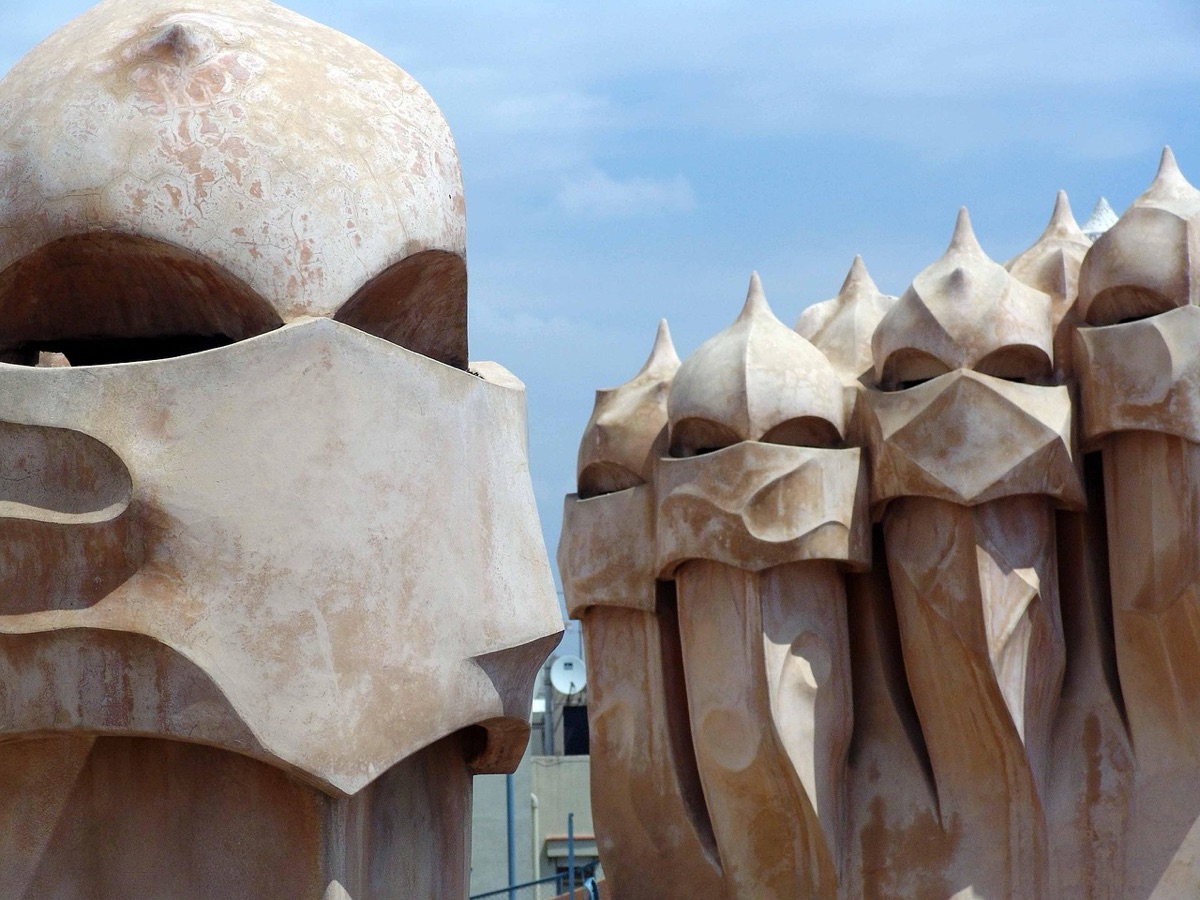
Beyond the Icons: The Urban Fabric of Barcelona
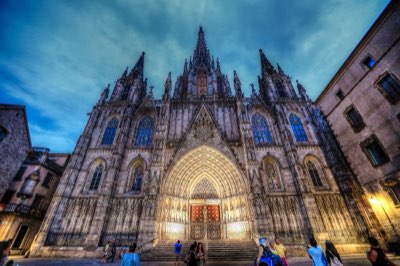
Walking through the narrow, winding streets of the Gothic Quarter, you feel the transition from the medieval past to the sweeping curves of the Eixample. The city itself feels like a map of competing eras. According to World Bank data, Spain recorded a share of internet users of 95.8% in 2024.
Gaudí’s work does not exist in a vacuum; it is deeply tied to the urban planning of Barcelona. His later works and the way he utilized the grid of the Eixample district show how he integrated radical geometry into a growing metropolis.
He didn't just build isolated objects; he created landmarks that anchored the city's expanding identity. His influence can be seen in how the city balances its historical weight with the need for modern, breathing spaces.
When I walked through the Eixample district last summer, I noticed how the shadow of a single Gaudí-inspired balcony could change the entire mood of a street corner. It wasn't just a building; it was an intervention in the urban rhythm.
His work remains a living, breathing entity that continues to challenge architects to think about how buildings can exist as part of an ecosystem rather than just objects placed upon it. But to truly grasp the depth, you need a method for observation.
Navigating the Visit: From Tourist Sight to Scholar's Journey
You stand in the middle of a crowded plaza, surrounded by hundreds of people holding cameras, yet you feel a sudden sense of isolation as you try to focus on a single carved column. It is easy to get lost in the crowd and see only the "famous" parts.
To move from a casual tourist to a deep observer, you must change your approach. Do not try to see everything in one go. Instead, pick a specific element—the way light hits a stained-glass window or the way a column branches like a tree—and study it for ten minutes.
| Visit Type | Focus Area | Goal |
|---|---|---|
| The Casual Tourist | Iconic Facades & Photo Ops | Capturing the visual spectacle. |
| The Design Enthusiast | Materiality & Joinery | Understanding how pieces fit together. |
| The Scholar | Structural Engineering & Context | Analyzing geometry and historical intent. |
To absorb the most context, follow this structured approach to your visit:
- Time your arrival: Visit the Sagrada Família during the "golden hour" (usually between 5:00 PM and 7:00 PM depending on the season) to see how the stained glass transforms the interior into a kaleidoscope of color.
- Observe the base first: In residential buildings like Casa Batlló, spend ten minutes at eye level to see the texture of the stone and the transition from ground to facade.
- Look upward for geometry: In the parks, find a single column and trace its line to the ceiling to understand how weight is distributed through organic shapes.
- Document the details: Use a notebook to jot down specific materials—the mix of glass, ceramic, and wrought iron—to help you remember the tactile reality of the site.
While these methods help, there is a limit to what one can absorb in a single trip. It is impossible to master his entire catalog in one week, and trying to do so often leads to "museum fatigue."
The Enduring Legacy: Gaudí’s Impact on Modernism
The sun sets over the Mediterranean, casting a golden glow over the city skyline, where the spires of the Sagrada Família stand as a permanent silhouette against the darkening sky. The city feels both ancient and perpetually new.
Gaudí’s true legacy lies in his structural innovation. He mastered complex shapes like hyperboloids and parabolic arches long before they were common in modern engineering. He proved that math and nature could speak the same language.
His work remains a living, breathing entity that continues to challenge architects to think about how buildings can exist as part of an ecosystem rather than just objects placed upon it. In 2026, as we look toward more sustainable and organic urbanism, his lessons are more relevant than ever.
#



Comments 0