Gaudí Masterpieces: 28 Details to Unlock His Genius
"The straight line belongs to man, but the curve belongs to God."
To truly witness Antoni Gaudí’s work, you must look past the eccentric shapes and see the mathematics of nature hidden in plain sight. Understanding his philosophy turns a standard sightseeing trip into a profound encounter with living art.
* Nature as Blueprint: Gaudí used organic forms like trees and bones to create structurally sound buildings. * The Play of Light: Architecture is designed to change mood through calculated sunlight and stained glass. * Tactile Mastery: Use the "Trencadís" (mosaic) and varied textures to understand his material language. * Strategic Timing: Visit at dawn or dusk to witness the intended light displays.

Why are we obsessed with these curves?
Late in the afternoon, the red light from the stained glass of the Sagrada Família spills across the stone floor, stretching long shadows toward the nave. For a second, the massive, heavy stone structure feels less like a building and more like a breathing, living organism.
According to World Bank data, Spain recorded a share of internet users of 95.8% in 2024.
Visitors often walk into these spaces and wonder why the designs feel so strange or "weird." However, every winding line and irregular shape is the result of rigorous mathematical calculation and a deep reverence for the natural world.
Gaudí believed that nature provided the most efficient solutions for strength and stability. His work isn't just about being pretty; it is a massive experiment in grafting the laws of biology onto stone and mortar.
When you stand before his work, don't just look at the shape—ask yourself how that curve is supporting the weight of the ceiling. But how does a curve actually hold up a mountain of stone?
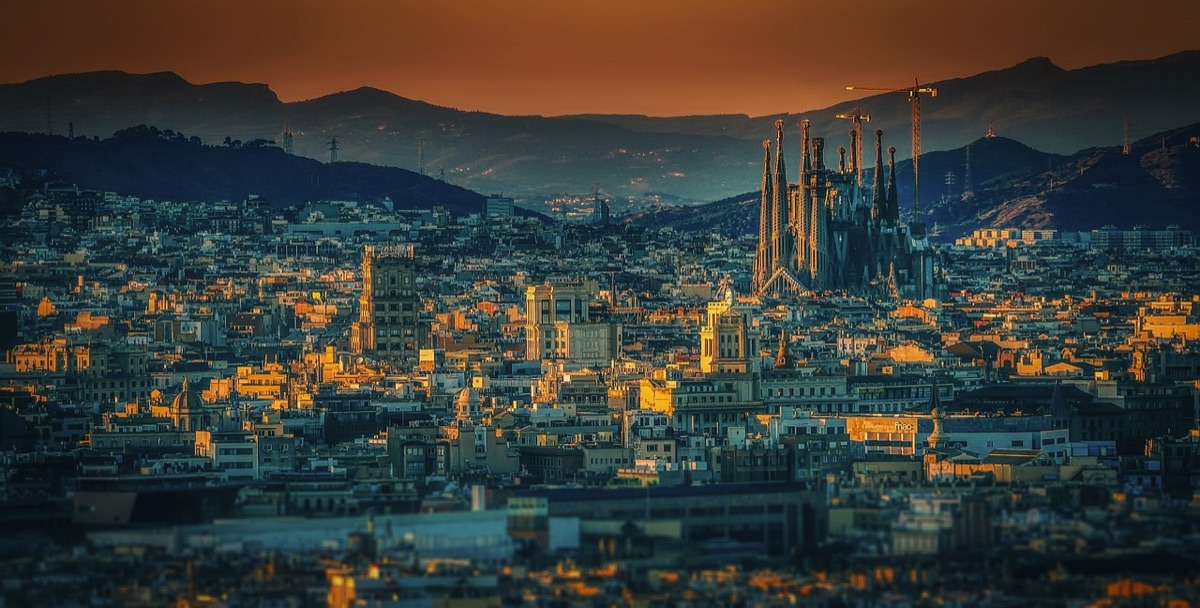
How can nature be translated into stone? Walking through a dense forest, you might notice how tree branches interlock to form a natural ceiling. Gaudí took this exact structural logic and turned it into the skeleton of his buildings.
His primary design rule was the imitation of organic growth. Instead of forced, artificial straight lines, he utilized the shapes of tree trunks, animal bones, seashells, and mountain ridges.
The massive columns inside the Sagrada Família, which branch out as they reach the ceiling, are a direct recreation of how a tree distributes weight.
When I stood beneath those columns in 2025, I realized they didn't just look like trees; they functioned like them, moving weight downward through branching paths rather than single vertical pillars.
These organic structures are not merely decorative. They are engineering triumphs designed to distribute heavy loads efficiently. By studying how a column mimics a trunk, you begin to see the genius of his structural mechanics.
But moving from the strength of stone to the warmth of color reveals an entirely different kind of engineering.
Can light and color reconstruct space? On a bright, clear morning, standing on the terrace of Casa Batlló, the blue tiles catch the sunlight and shimmer like moving water. It feels as though you have stepped into the depths of the ocean rather than onto a city street.
For Gaudí, light was the element that gave a space its soul. He meticulously calculated window placement, glass thickness, and tile angles so that the atmosphere would shift dramatically throughout the day. A wall is never just a flat surface; it is a canvas for moving light.
At the Sagrada Família, the eastern side is bathed in cool blues while the western side glows with warm reds. This isn't an accident; it is a theatrical use of light designed to evoke a sense of divinity.
Choosing the right time of day is the difference between seeing a building and experiencing a masterpiece. However, the visual magic is only half the story; the physical texture is where the soul truly resides.
The tactile experience of materials
Running a hand along a rough stone exterior, you can feel the transition from smooth polished marble to jagged, recycled ceramics. Each surface tells a different story about the element used.
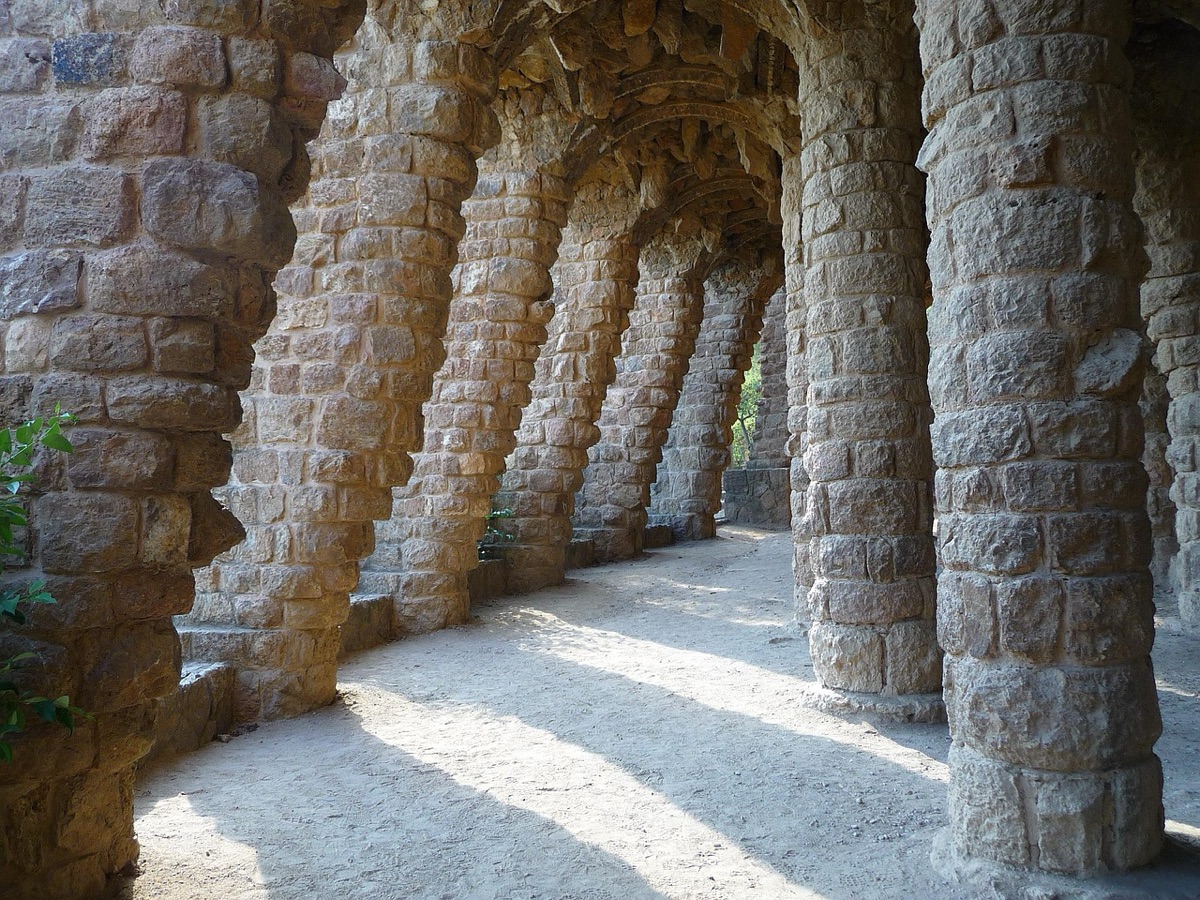
Gaudí was a master of material properties. He pioneered the "Trencadís" technique, which involves using broken shards of ceramic and glass to create vibrant, textured mosaics. You can see this most clearly in the colorful benches of Park Güell or the decorative flourishes of Casa Milà.
He used materials to send messages. He mixed the heavy weight of stone with the lightness of glass and the sharpness of metal to create a rhythmic visual experience. To appreciate his work, you must use your eyes and your sense of touch to understand how these textures interact.
But how do you actually organize a visit to see it all without feeling overwhelmed?
Practical guide for the ultimate visit
To fully immerse yourself in the world of Gaudí, you need a plan that accounts for both the architecture and the environment.
| Strategy | Action | Expected Result |
|---|---|---|
| Timing | Visit at sunrise or sunset | Witness dramatic light shifts and natural color hues |
| Pathing | Move from ground up, inside out | Understand structural mechanics and spatial expansion |
| Booking | Pre-book tower access and specific slots | Avoid crowds and secure the best viewing angles |
| Focus | Connect ceiling structures to floor patterns | Discover the completeness of his organic design |
Recommended Gaudí Route
- The Foundation: Start with Casa Milà or Casa Batlló to understand his philosophy on residential living and domestic space.
- The Immersion: Head to Park Güell to see how architecture can harmonize with a natural landscape.
- The Pinnacle: Conclude at the Sagrada Família to witness the massive, epic narrative of his life's work.
Balancing art and travel
| Tip | Why it matters |
|---|---|
| Carry a notebook | Capture fleeting inspirations and thoughts that a photo cannot capture. |
| Practice patience | Wait for the specific moment when the light hits the glass perfectly. |
| Show respect | Understand that these are preserved heritage sites requiring careful observation. |
Where to stay and how to move
Finding the right home base is essential for a smooth trip.
The Eixample District: This is the heart of the action. Most of Gaudí's major works are concentrated here, making it easy to walk between sites. It is a safe, upscale area perfect for travelers who want to be in the center of the architectural context.
The Gothic Quarter: If you prefer a more medieval atmosphere, this area is beautiful. However, the narrow streets can be difficult to navigate with heavy luggage, and you should stay mindful of your belongings in the crowded alleys.



Comments 0